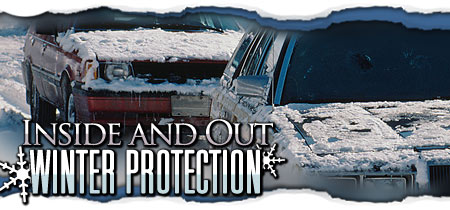
How to Protect
Your Car Inside and Out This Winter
To
help drivers combat the tough road conditions associated with the winter season, the experts
at Prestone offer information on vehicle preparation to ensure that motorists
and their vehicles are properly equipped. Utilizing these tips will help motorists
avoid potential roadside issues and eliminate some unnecessary stress while traveling
during winter.
1.
Get a basic tune-up — Hoses, belts, spark plugs and wires should be checked
and changed if necessary.
2.
Protect against freeze ups — Antifreeze/coolant is extremely important in colder
temperatures. If there is too much water and not enough antifreeze/coolant in
the system, it can freeze up, expand and crack key engine components. Motorists
should check fluid levels and top them off before
temperatures plummet.
3.
Check tire tread — Bald tires are not only unsafe, but can potentially lead
to a disaster on slick roadways. Tires connect the car to the road, so traction
is imperative during winter. In areas with high snow accumulation, winter tires are a solid investment, providing more traction when accelerating,
braking and turning.
4.
Replace worn brake pads and shoes — Having maximum stopping power is essential.
5.
Use a winter-formulated washer fluid — Regular blue washer fluids can freeze
in the washer reservoir or on the windshield while driving. Special de-icer formulas
will stay liquid in the washer reservoir at temperatures as low as -34 degree Farenheit.
6.
Check windshield wipers — If they streak or cause problems, motorists should
buy blades especially made for winter conditions. Visibility is crucial this time
of year.
7.
Prevent gas line freeze — Using a winter fuel system cleaner helps prevent
gas line freeze in extremely cold weather conditions. Prestone R&D engineers
recommend adding a bottle of fuel de-icer at every fill up to keep moisture from
freezing in the fuel line.
8.
Be prepared for an emergency — While routine maintenance can afford drivers
a certain level of comfort, having a well-stocked kit provides peace of mind.
Keep a cellular phone, extra de-icer washer fluid,
a good ice scraper and snowbrush, spray de-icer, blankets, snacks, bottled water
and warm clothing in the kit.
9.
Remove snow and ice from the entire car — Not taking the time to clear off
all surfaces before venturing onto roadways can create dangerous situations for
all motorists. Blowing snow and ice causes reduced visibility and treacherous
obstructions.
10.
Pay attention — Take a moment to listen to weather and traffic reports. When
the conditions are too hazardous, motorists should stay off the roads. If people
must travel when roads are bad, it is important they know their vehicle and use
extreme caution. Keeping an 8-10 second distance between cars, reducing speeds
on hills, storing sandbags in the trunk of rear-wheel drive cars and wearing seat
belts will all help prevent accidents from occurring. It is also a good idea for
motorists to always keep at least a half tank of gas in vehicles during winter
months — it will be their only source of heat if stranded.
Source: Prestone |