|

Travel Safety Tips for Every Situation
by
Sandy Esslinger
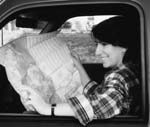 Road
trips, for weeks or weekends, have been one of the most popular ways
of traveling in America. Probably, the weekend road trip is the most
popular--it begins as an idea Friday and is a reality by Saturday
morning. Road trips provide adventures galore, including adventures
that we laugh about later, but aren't so funny when they're actually
taking place. By planning ahead for a safe trip, many negative adventures
can be avoided, allowing for more memorable, positive adventures.
Here are some tips to keep in mind when planning that "spontaneous"
weekend getaway. Road
trips, for weeks or weekends, have been one of the most popular ways
of traveling in America. Probably, the weekend road trip is the most
popular--it begins as an idea Friday and is a reality by Saturday
morning. Road trips provide adventures galore, including adventures
that we laugh about later, but aren't so funny when they're actually
taking place. By planning ahead for a safe trip, many negative adventures
can be avoided, allowing for more memorable, positive adventures.
Here are some tips to keep in mind when planning that "spontaneous"
weekend getaway.
The
most important services you can do are to plan ahead and bring along
your own good judgment. Know where you're going, what the weather
conditions will be, the distances you are traveling and with whom
you are traveling. If you're going somewhere unfamiliar, take along
a complete complement of maps and tour books. The tour books will
provide information about places to stop, accommodations and restaurants.
They also can turn a detour into a fun adventure, just because you
have the right book to show you what to see. If you plan your distances
well, you won't overtax yourself. Don't risk falling asleep at the
wheel.
First
and foremost, you should always make certain that the car is mechanically
sound and in top roadworthy condition before you go. Take your car
in for a tune-up if it's due. Check the belts, hoses, fluid levels,
tires, and brakes. The spare tire should be inflated and ready for
use. If you have an exotic foreign car, carry extra oil, fan belts
and hoses--particularly if you're traveling to remote places.
In
case of unforeseen delays or breakdowns, you should always have nutritious
snacks and at least a quart of water per person for those times when
you might just have to become a car dweller. Also have comfortable
clothing and shoes, since you many need to walk somewhere to get assistance.
An extra blanket and pillow could be a great asset if you should have
to sleep in the car. And don't forget to take a jacket or sweater.
Even the hottest days can get chilly at night, especially in the mountains.
There
are some basic things you always should have in your car, whether
just commuting to and from work or taking an extended road trip: a
flashlight, a small but complete first-aid kit, including your prescription
medications in case you're delayed and flares or additional warning
lights. If you're handy, duct tape can temporarily repair a blown
hose. And don't forget a few tools such as a wrench and screwdriver--Phillips
and standard. However, no matter how handy any of us are, new cars
are finely tuned machines that are run by computers, so it's not a
bad idea to subscribe to some type of roadside assistance program,
like AAA, which can tow the car a reputable facility that can fix
the car better than we could on the road. Fortunately, many new cars
are offering free 24-hour roadside assistance with trip interruption
services when you purchase the car. Definitely look for this feature
when you're out shopping the lots.
In
the event you find yourself on the side of the road or experiencing
a tire blowout, there are a few things to keep in mind. Changing a
tire or repairing your car at the side of the road is dangerous and
time-consuming. The best idea is to call a tow truck with your cellular
phone. In fact, the AAA and the LAPD strongly recommend cellular phones
as a primary safety tool. If you are unable to get to a telephone,
remember to pull completely off the road to work on your vehicle,
and never work under the car on the driver's side near busy traffic.
A good item to store in the trunk alongside the other supplies is
a windscreen banner that has "call police" or "get
help" printed on it in block letters. That way, you can stay
in your car and safely request assistance.
Always
keep your personal safety in mind, as well. If you are stuck on the
road with problems, don't get out of the car if someone pulls up behind
you. Stay inside the vehicle with the doors locked, and the windows
up. Ask the person to call the auto club or the police. Thank them
for their offer of help, but stay in the car. Too many women have
met with disaster by not playing it safe.
When
traveling, often, specific road and weather conditions will require
special attention; if you're prepared for them, it will make your
trip more enjoyable and safe. For instance, if you're going to be
traveling in snow and ice, be sure to bring chains. Buy them before
you leave, since you may be turned away from a snowy road without
them, and if you're forced to buy them on site, you can bet the price
will be double what they cost at home.
General
travel in the summer requires some general maintenance. Especially
in desert conditions, make sure to pack drinking water, extra water
and antifreeze. In addition, the cooling system should be flushed,
thermostats replaced and air-conditioning checked to make sure that
it has the appropriate gasses to cool comfortably.
Generally,
fan belts and hoses should be in good condition. Water hoses should
be soft, flexible and rubbery. Tires should be inflated to the recommended
pressures, but less than maximum, because the gas will expand, over-inflate
and explode the tire. Read your car's owner's manual and make sure
to set the tires correctly.
If
you decide to make the mechanical aspect someone else's headache and
you rent a car, make sure that you know how to access the gas, open
the hood and remove the key from the ignition switch. These things
sound like common sense, but each car has its own idiosyncrasies.
With a little preparation, many of the frustrations that go along
with road-trips can be eliminated. It's a good idea to plan and prepare
for the trip as if it will be longer than over night! Be safe and
bon voyage!
|

|