Tips for correct use of vehicle safety devices
Plastics
have contributed to a multitude of innovations in vehicle
safety, including safety belts, air bags and child seats.
While these devices are proven lifesavers - the National
Highway Traffic Safety Administration (NHSTA) estimates
that seat belts alone have been reported to save 11,000
lives each year since 1998 - proper use is key to maximizing
their safety benefits.
Safety
Belts
 |
|
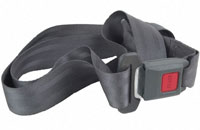
In
most states, it is the law to wear a seat belt.
Many states
are also heightening enforcement of safety
belt laws. |
Using
your vehicle's safety belts, which are woven from thousands
of strands of durable polyester plastic, isn't just a good
idea; in many states it's the law. What's more, many states
have been conducting heightened enforcement of their safety
belt laws, giving you additional incentive to use your safety
belts and use them correctly.
Lap
belts should fit low and tight across your hips/pelvis,
not your stomach area.
-
Place
the shoulder belt snug across your chest, away from your
neck.
-
The
shoulder belt should not be placed behind your back or
under your arm.
Air
Bags
NHSTA
statistics show that air bags reduce the risk of dying in
a crash by about 30 percent. Since 1998, all new cars have
been required to have air bags on both driver and passenger
sides. In recent years, auto manufacturers have started
to add seat-mounted and door-mounted side air bags to their
vehicles.
While airbags clearly contribute to your safety behind the wheel, you should take a moment to understand how to optimize their effectiveness:
-
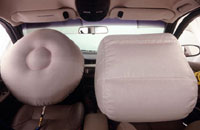 |
The NHTSA recommends sitting at least 10 inches from the driver air bag to avoid serious injuries. |
Research has shown that sitting too close to an air bag can cause serious injuries. The NHTSA recommends that you place yourself 10 inches from your driver air bag (measure from the center of the steering wheel to your breastbone).
-
If you currently sit less than 10 inches away, you can adjust your driving position as follows:
-
Move your seat to the rear as far as possible while still reaching the pedals comfortably.
-
Slightly recline the back of your seat. Most drivers can achieve the 10-inch distance even with the driver seat all the way forward by slightly reclining the back of the seat. If reclining the seat makes it hard to see the road, you can raise yourself up by using your car's seat-raising system or a firm, non-slippery cushion.
-
Point the air bag toward your chest, instead of your head and neck, by tilting your steering wheel downward.
-
The rules are different for children. An air bag can seriously injure, or even kill, an unbuckled child who is sitting too close or is thrown toward the dash during emergency braking. The following safety points are important:
-
Children 12 and under should ride in the back seat. Children 8 and under should be buckled up in a properly installed, age-appropriate rear child safety seat (see guidelines below).
-
Infants in rear-facing child seats should never ride in the front seat of a car equipped with a passenger-side air bag.
-
If a child over one year old must ride in the front seat with a passenger-side air bag, he or she should be in a front-facing child safety seat, a booster seat or a properly fitting lap/shoulder belt, and the seat should be moved as far back as possible.
Child Safety Seats
When correctly chosen, installed and used, child safety seats -- made of strong, impact-resistant plastic -- can prevent injury and save lives. However, four out of five car seats are installed incorrectly.
When choosing your child's safety seat, consider their age and weight. (Consult the NHTSA website for more information.)
(Source: American Plastics Council) |